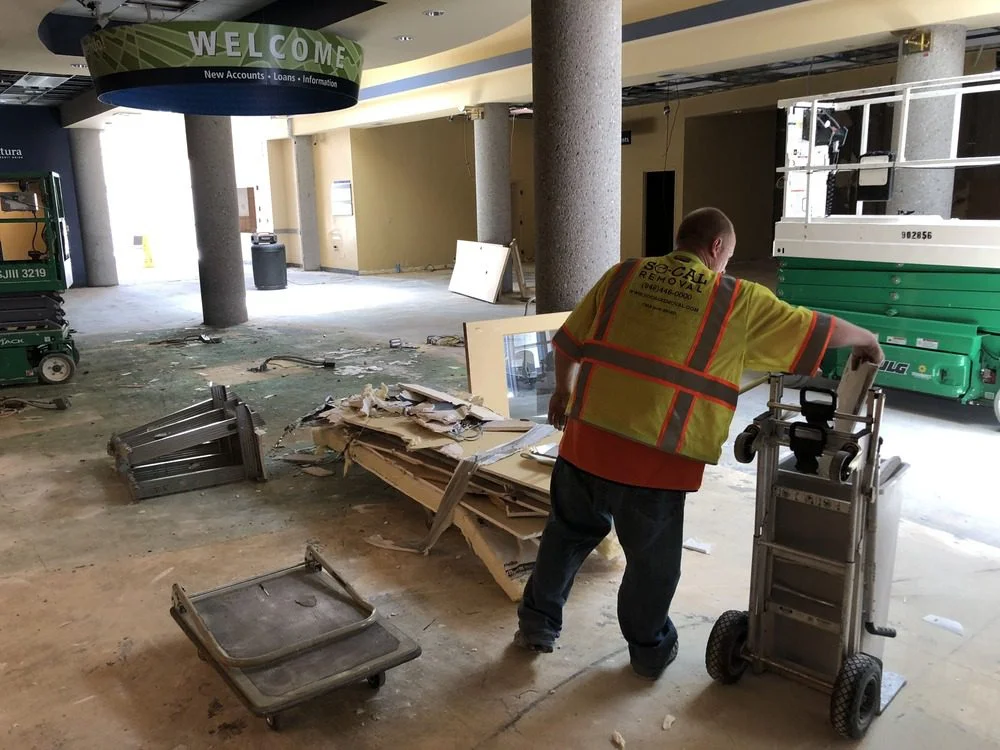
Commercial – Industrial – Institutional – Public works
Commercial Mold Remediation in Orange County & Southern California
SoCal Removal handles mold remediation in commercial, industrial and public buildings: containment, removal of affected materials, HEPA cleaning and the handoff to repair and reconstruction, working from an independent assessor’s protocol.
- CSLB #980451
- A, B, C-21, HAZ
- DIR 1000040690
- Commercial and public work
Where It Starts
Where mold starts in commercial buildings
Mold follows water. In commercial and industrial buildings, these are the sources we see most, and each one has a responsible trade that fixes it before the affected area is rebuilt.
01
Condensation at cold equipment
Walk-in coolers, freezers, chillers, chilled-water lines and refrigerated cases keep nearby drywall wet in restaurants, grocery stores, cold storage, labs and mechanical rooms.
02
Fire sprinkler and hydronic leaks
Pinhole leaks and failed fittings above ceilings soak ceiling tile, insulation and the tops of walls before anyone sees them.
03
Roof and envelope leaks
Flashing, roof drains, skylights, windows and wall penetrations let water run inside walls in warehouses, tilt-ups and offices.
04
HVAC condensate
Clogged condensate lines, overflowing drain pans and sweating ductwork at air handlers and rooftop units.
05
Restrooms, kitchens and break rooms
Supply lines, drains, water heaters and fixtures leaking into walls, casework and floors.
06
Found during demolition or tenant improvements
Growth behind casework, wall finishes and flooring that shows up only once a space is opened. Affected work pauses until the scope is defined.
Roles
Independent assessment, contractor removal
California does not license mold assessors or remediators, so the project documents decide who does what. We keep testing and clearance independent of the contractor removing the material, the same way asbestos work is handled.
- Owner or facility managerProvides access and the water history, authorizes source repair, and retains the independent assessor.
- Independent assessorEvaluates the conditions, samples when a result will change a decision, writes the remediation protocol and performs post-remediation verification.
- SoCal RemovalContainment, removal of affected materials, HEPA cleaning, waste handling, daily records and the handoff to the next trade, as defined in the written scope.
- Responsible tradesLeak and condensation repair, HVAC work, structural drying and reconstruction.
What we do not do
We do not test for mold, interpret laboratory results, give health or occupancy opinions, or verify our own work.
If you do not have an assessor yet, we can arrange the initial assessment as a separate line item in the proposal, or you can contract one directly. Post-remediation verification should be retained by the owner.
Scale
How the work is scaled
The assessor’s protocol sets the controls. As a starting point, the EPA’s guide for schools and commercial buildings scales protection to the affected area.
Under 10 sq ft
Minimum protection: an N-95 respirator, gloves and goggles. No containment required.
10 to 100 sq ft
Limited or full protection and limited containment, based on professional judgment about exposure and the size of the area.
Over 100 sq ft
Full protection and full containment, also used for smaller areas when exposure to workers or occupants could be significant.
Sewage-contaminated water, HVAC involvement, sensitive occupants or a food, health care or school setting can raise the level of control.
Controls
How the work area is controlled
- Containment and negative airPolyethylene isolation and HEPA air filtration, exhausted outside where the protocol calls for it, with pressure monitoring when specified.
- HVAC isolationSupplies and returns in the work area are sealed, and the system is shut down or isolated by the mechanical contractor. The owner authorizes restart.
- Removal of porous materialsDrywall, ceiling tile, insulation and carpet with growth are removed and bagged to the limits in the protocol.
- CleaningFraming and hard surfaces are HEPA vacuumed and damp wiped, with brushing or sanding where the protocol calls for it.
- Waste out on a set pathBagged at the containment and carried out on a planned route so it does not travel through occupied space.
- Products as an adjunct onlyAntimicrobials are used only as the protocol and the product label allow. Painting, fogging or sealing over mold is not remediation.
Operating and occupied facilities
Restaurants, grocery stores, cold storage, schools and agency buildings usually have to keep running. Work is phased, scheduled after hours when needed, and laid out to keep exits, fire separations and pressure relationships intact, with daily communication to facility staff.
Some areas may need to be vacated during removal; the protocol and the owner make that call.
Older Buildings
Asbestos and lead come first
Mold removal disturbs the same materials asbestos and lead rules cover, so those questions are answered before anything is cut out.
Asbestos
Drywall joint compound, plaster, flooring, mastic and ceiling tile in older buildings can contain asbestos. South Coast AQMD Rule 1403 requires an asbestos survey before renovation work disturbs building materials, and Cal/OSHA treats certain older materials as presumed asbestos until an inspection shows otherwise (8 CCR 1529).
Lead
Paint and coatings on the affected walls and trim can contain lead, which brings separate work practices and worker protection when they are disturbed. Our firm holds EPA lead renovation (RRP) certification.
Because we also take on asbestos projects (abated by our Cal/OSHA-registered subcontractor) and lead removal, one contractor sequences the survey, any abatement, the mold removal and the demolition that follows.
Project Sequence
How a commercial mold project moves forward
- 01Review the assessment, protocol and water history
- 02Source repaired or stabilized by the responsible trade
- 03Asbestos and lead check on the materials to be disturbed
- 04Containment, HVAC isolation and protection of occupied areas
- 05Removal, HEPA cleaning and waste out
- 06Independent post-remediation verification
- 07Handoff to drying, repair and reconstruction
Project Proof
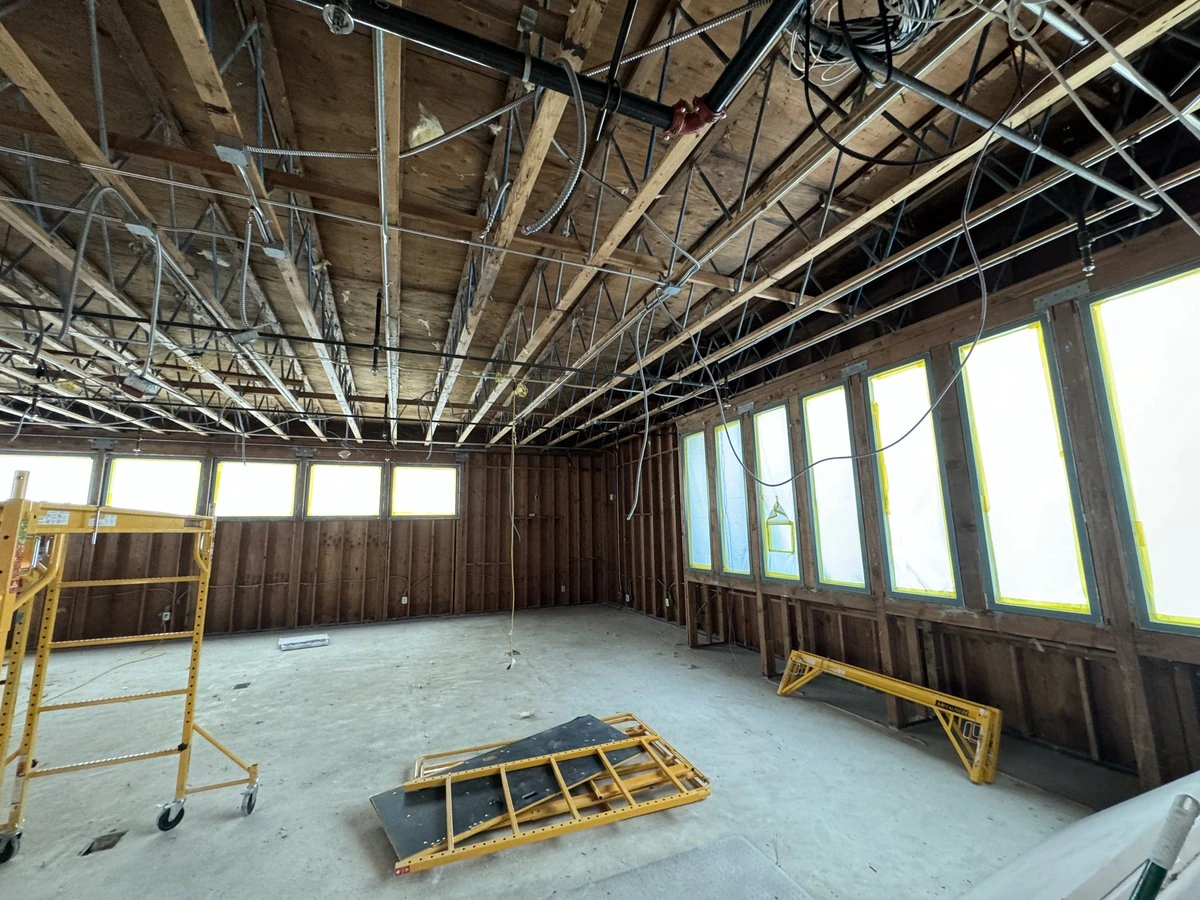
Bandini Library abatement and interior removal, Commerce
On a public-library renovation, SoCal Removal held the abatement and interior-removal package under the prime contractor, including removal of designated wall and ceiling finishes and specified mold-affected materials. The field scope was performed by a specialist subcontractor under our work order.
- LocationCommerce, California
- FacilityPublic library
- Work period2024
Public and Institutional Work
Built for agency and facility requirements
We are registered with the Department of Industrial Relations (PWCR 1000040690), and prevailing wage and certified payroll are standard on public projects. We maintain project-specific bid, performance and payment bonding capacity for public work.
Daily reports, waste records, insurance certificates and closeout documents are kept to the contract’s requirements.
Mold Project Questions
Commercial mold remediation FAQs
Do you take residential mold projects?
No. Our mold work is commercial, industrial, institutional and public: offices, retail, restaurants and grocery, cold storage and warehouses, schools, libraries and agency facilities.
Do you test for mold?
No. Testing, interpretation and clearance belong to an independent assessor. If you do not have one, we can arrange the initial assessment as a separate line item or you can contract one directly.
Can you remove mold next to walk-in coolers, freezers or chillers?
Yes. The refrigeration or mechanical contractor corrects the condensation source, and we remove and replace the affected drywall, insulation and finishes within the written scope.
Is sampling always required?
No. EPA guidance focuses on correcting the moisture and removing or cleaning the affected materials. Sampling is useful when a result will change a decision, and the assessor designs and interprets it.
Can the facility stay open?
Usually, with phasing, after-hours work, sealed HVAC pathways and protected exits. Some areas may need to be vacated during removal, as the protocol and the owner decide.
Can mold be painted, fogged or sealed over?
No. Those steps do not replace correcting the moisture and removing or cleaning the affected materials. Any product is used only as the protocol and its label allow.
What if the materials may contain asbestos or lead?
Work on those materials stops until they are surveyed. Asbestos and lead have their own survey, notification and work-practice rules, and we sequence that work ahead of the mold removal.
What should I send for a project review?
The assessment or protocol, any laboratory reports, photos, plans, affected rooms and materials, the water history, occupancy and HVAC information, the schedule, whether it is public or private work, and the reconstruction that follows.
Get a Quote
Send us your commercial mold project
Start with the facility, the affected areas and the water source. Add the assessment or protocol if you have one, photos and plans. We will review project fit and identify the information needed for a defined proposal, including whether a site walk is needed.
Prefer to speak directly?
Call (949) 446-0000
Get a Quote
Use our project review form to share the facility, scope and available documents. Your information helps us prepare the next step.