Contaminated-Soil Excavation, Handling & Removal
SoCal Removal performs the defined contractor field scope for contaminated-soil and unknown-fill projects across Southern California. From an issued characterization package and written work plan, we arrange controlled excavation, material segregation, stockpile and dust controls, loading, waste-stream-specific transportation, receiving-facility requirements and construction handoff without claiming laboratory, waste-determination or regulatory-closure authority.
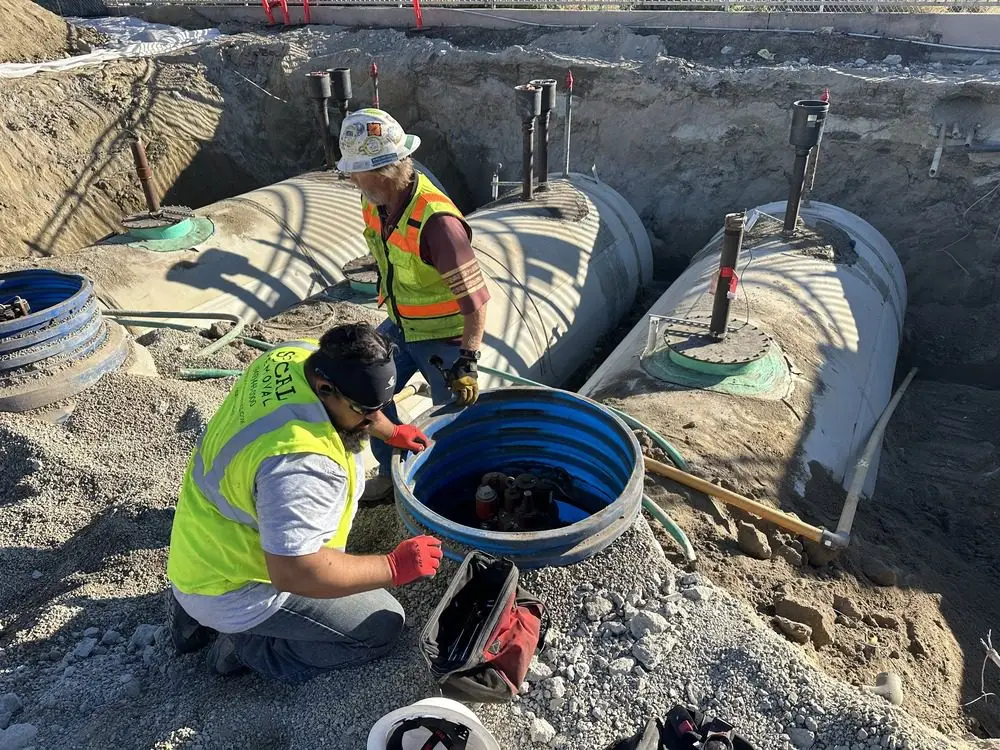
Project Readiness
Start With What Is Known—and Label What Is Not
Good soil pricing connects the sample locations and analytical record to estimated limits, excavation geometry, stockpile rules, truck access, an accepted destination and the work that follows.
Send the complete current record
Provide the report, analytical tables, sample map, boring logs, estimated limits and depths, waste profiles, facility correspondence, agency direction, plans, utility information, access and haul constraints, backfill requirements, schedule and later-phase work. We will identify contractor scope interfaces and missing pricing inputs.
Use the history to define the next investigation
Former tanks, fueling, dry cleaning, manufacturing, agricultural use, imported fill, demolition debris, spills or illegal dumping can guide review, but history alone does not classify the soil. Assign the environmental professional and obtain project-specific characterization before disturbance or disposal decisions are treated as final.
Pause the affected activity and preserve the evidence
Limit disturbance as appropriate, control access, document the exact location, depth, odor, staining, debris, containers, piping or other observed condition, and notify the owner and designated environmental professional. Updated evaluation and written direction should precede renewed excavation, stockpiling or shipment.
Field rule: Appearance, odor, a historic use or a website image can signal a question; none of them replaces characterization, a generator determination, a facility acceptance or agency direction.
Project Inputs
The Soil Is Only One Part of the Scope
Quantity drives production, but classification, destination, access, excavation support, utilities, water, weather, trucking and replacement material often decide whether the schedule holds.
The environmental record defines what is known and what criteria apply. The contractor plan translates that record into excavation limits, equipment, controls, logistics, sequencing and documented handoffs.
Ways to Reduce Uncertainty
These tools can reduce uncertainty, but they cannot guarantee every concealed condition or replace required surveys, engineering, utility releases, sampling or destructive verification.
- Utility records and field markings
Reconcile available maps, owner records, visible features and current field markings while treating undocumented, abandoned and privately owned services as unresolved.
- GPR and electromagnetic locating
Ground-penetrating radar evaluates reflected subsurface contrasts; electromagnetic locating traces conductive or toneable utilities. Each method has material, depth and site limitations.
- Potholing, test pits and soil characterization
Authorized exposure can confirm selected utility locations and depths, while test pits, borings and analytical work address soil limits, materials and disposition questions.
- Current investigation, characterization, analytical tables, maps and revisions.
- Estimated horizontal and vertical limits, quantities, densities and swell assumptions.
- Identified generator, authorized signer and consultant or agency direction.
- Waste profile, facility-accepted receiving criteria and required transporter-registration plan.
- Excavation, grading, backfill, compaction and downstream construction requirements.
- Utilities, tanks, piping, groundwater, shoring, benching and structural interfaces.
- Stockpile, cover, segregation, decontamination, stormwater and dust-control requirements.
- Truck type, payload, queue, load-out area, route, hours and track-out controls.
- Public exposure, neighboring uses, occupied operations, security and work windows.
- Required notices, monitoring, records, agency hold points and acceptance criteria.
Former fueling, equipment, manufacturing, agricultural, dry-cleaning, waste, utility and imported-fill histories can create different characterization and oversight paths. The actual site record controls.
Common Project Conditions
Different Discoveries Route the Work Differently
The field response depends on the material, affected media, activity, location, quantity, worker exposure, destination and responsible agency—not on a generic “contaminated dirt” label.
- 01Petroleum or VOC Impacts
Tanks, piping, fueling, solvents, odors or stained soil.
- 02Metals or Pesticides
Industrial, demolition, agricultural or imported-fill histories.
- 03Buried Debris
Mixed construction material, drums, waste or undocumented fill.
- 04Utility Discovery
Unknown piping, conduits, structures or conflicting records.
- 05Water Interface
Groundwater, stormwater, dewatering or discharge restrictions.
- 06Redevelopment Export
Bulk excavation tied to grading, demolition or new construction.
- 07Agency-Directed Work
Defined oversight, hold points, reports and closure path.
Field Documentation
Photographs Should Explain Location and Stage
Images can document excavation geometry, equipment position, exposed structures and work sequence. They do not identify a contaminant, establish a waste class or prove regulatory closure.
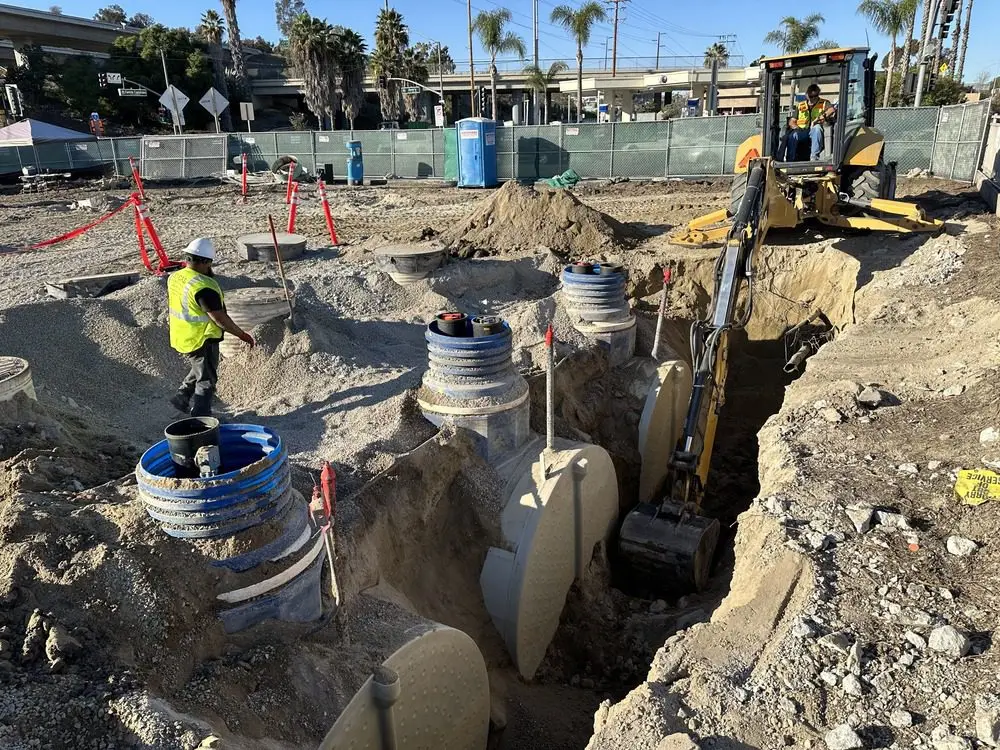
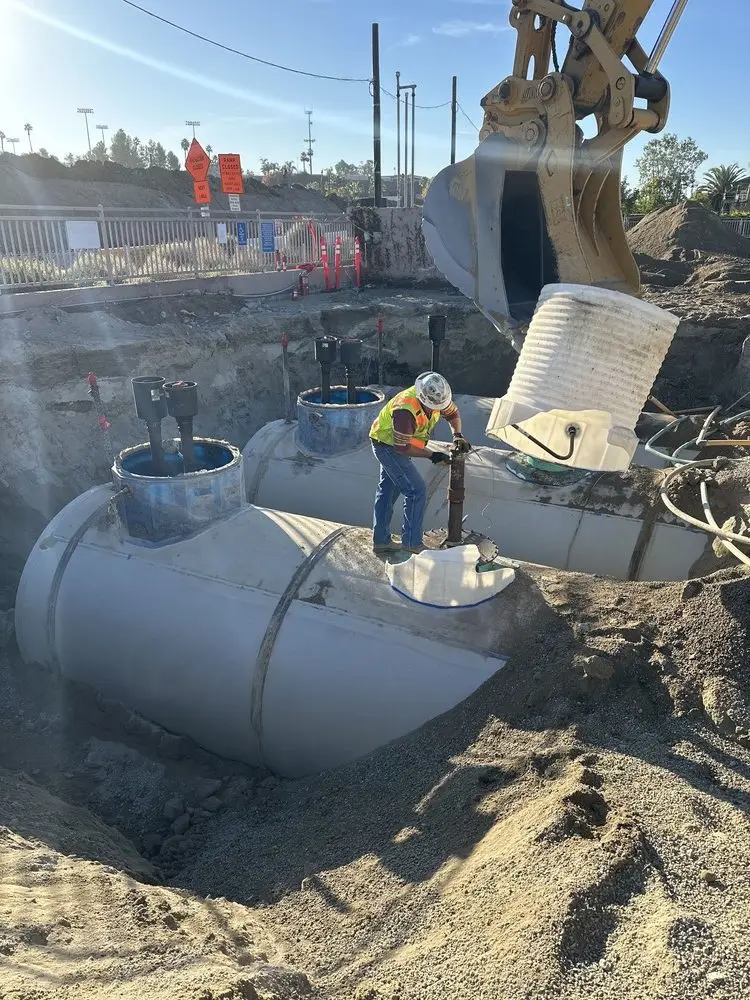
A useful photo log records:
- Date, location, depth and work stage.
- Excavation, stockpile and load-out boundaries.
- Observed staining, odor, debris or structures.
- Controls, monitoring locations and changed conditions.
- Written direction and the party issuing it.
Responsibilities
A Defensible Load Has a Named Chain of Responsibility
Client / Owner / Generator
The client or owner provides site records, assigns the environmental professional, and approves commercial scope and changes. The project must separately determine, from the actual facts and applicable law, each person or entity that is a generator or co-generator. The identified generator completes the required waste determination and shipping information. Assigning tasks by contract does not by itself determine or eliminate regulatory responsibility.
Environmental Professional & Laboratory
The assigned environmental professional designs and interprets project investigation and sampling when required, develops applicable criteria and plans, and provides field or closeout evaluation when engaged. A qualified laboratory performs the specified analysis and reports results; it does not automatically assume interpretation or closure authority.
SoCal Removal
Plans and performs the authorized contractor field scope, which may include excavation, segregation, stockpile and dust controls, loading, logistics, site documentation and planning with the designated project parties.
Transporter, Facility & Agencies
For off-site hazardous-waste shipments, a DTSC-registered hazardous-waste transporter is used when required for the actual waste stream; the authorized designated facility must accept the profile and be permitted to receive that waste. Applicable agencies retain their notice, oversight, approval and closure functions.
SoCal Removal does not provide in-house environmental testing, laboratory analysis, generator waste determinations, transporter registration, receiving-facility acceptance or regulatory closure. The proposal identifies what we perform, arrange, subcontract or exclude and the written information required before mobilization or shipment.
Material Journey
Follow the Material From Data Point to Final Record
A truckload should be traceable to an excavation area, approved profile, accepted destination and closeout record. Missing links become cost, schedule and compliance risk.
This sequence does not classify soil, select a facility, establish an employee-protection program, determine rule applicability or authorize excavation. Those decisions depend on current project documents, responsible parties and governing requirements.
- 01
Collect the Record
Assemble history, reports, maps, analytical data, plans, agency correspondence and schedule.
- 02
Characterize the Area
Assigned environmental professionals define the investigation and interpretation; qualified laboratories perform the specified analysis.
- 03
Define the Limits
Translate criteria into estimated horizontal and vertical limits, quantities and hold points.
- 04
Assign the Roles
Name the generator, signer, consultant, contractor, transporter, facility and agencies.
- 05
Approve the Path
Resolve profiles, acceptance, notices, plans, controls, routes, backfill and changes.
- 06
Excavate & Segregate
Follow the issued limits, controls, stockpile plan, monitoring and daily documentation.
- 07
Load & Deliver
Match each load to the authorized record, carrier, destination and receiving requirements.
- 08
Reconcile & Handoff
Close quantities and contractor records, address variances, and submit the handoff package to the party assigned to accept the next phase or issue regulatory closure. Completion of SoCal Removal’s field scope does not establish unrestricted use or agency closure.
Decision Ledger
Three Decisions Control Most Soil Scope Changes
The same cubic yard can have a different price and schedule when its classification, destination or excavation conditions change.
What does the current record establish?
Check the analytical basis, waste determination, limits, data gaps, agency criteria and whether additional investigation is required.
Who will accept the actual material?
Confirm the facility-accepted profile, applicable transporter registration, authorized designated facility, shipping record, route, hours, payload and rejected-load procedure.
Can the planned sequence be built safely?
Resolve utilities, structures, tanks, groundwater, excavation support, access, dust, weather, decontamination and downstream work.
Project-Specific Frameworks
Different Conditions Activate Different Requirements
No single soil rule governs every site. The project team should document which framework applies, why it applies, who submits required information and who keeps the field record.
Fugitive Dust
Earth-moving, stockpiling, loading, hauling and disturbed surfaces can require dust and track-out controls within South Coast AQMD jurisdiction.
- Project question
- What activities, size, location and operating conditions govern the control plan and records?
VOC-Contaminated Soil
Within South Coast AQMD jurisdiction, when Rule 1166 applies, the responsible person must obtain and operate under an Executive Officer-approved mitigation plan before covered excavation or handling and comply with applicable notice, monitoring, stockpile, loading and recordkeeping duties.
- Project question
- Do the material and planned activities meet the rule’s current applicability criteria?
Soils With Listed Toxic Air Contaminants
Within South Coast AQMD jurisdiction, when Rule 1466 applies, the owner or operator must comply with applicable notification, PM10 monitoring, signage, dust-control and recordkeeping duties. Applicability depends on the designated or notified site, applicable contaminant, volume and the rule’s exemptions.
- Project question
- Is the site and contaminant within the rule, and what current plan and notification duties apply?
Hazardous-Waste Operations
Cal/OSHA HAZWOPER requirements apply only when the operation falls within the regulation’s scope; other Title 8 requirements still apply to their covered tasks.
- Project question
- Has each employer documented whether §5192 applies to its operation and fulfilled the requirements protecting its employees? The project must also assign site-wide hazard-information, emergency-procedure and program-interface duties among the retaining employer, contractor and subcontractors.
Hazardous Waste and Site Mitigation
DTSC administers California hazardous-waste requirements and may oversee investigation and cleanup through applicable programs.
- Project question
- What generator, manifest, transporter, facility, oversight or closure requirements apply to this site and waste stream?
Soil, Groundwater and Vapor Releases
State and Regional Water Board programs may oversee releases affecting soil, groundwater, surface water or soil vapor, including separate underground-tank pathways.
- Project question
- What investigation, discharge, dewatering, cleanup, reporting or closure direction controls the work?
EPA CERCLA, RCRA and Underground Tanks
Federal involvement depends on the site, waste, release and governing program. EPA Region 9 may have a role when federal authority or federally managed cleanup applies.
- Project question
- Is the work connected to Superfund, RCRA, an underground-tank program or another federal requirement?
Stop-work boundary: If the issued record does not cover the condition encountered, affected work pauses until the responsible parties evaluate the change and provide the required written direction, acceptance and authorization.
Changed Conditions
When the Ground Does Not Match the Plan
Odor, staining, containers, buried debris, unexpected piping, groundwater, quantity increases or a rejected load can change the plan, controls, parties, price and schedule.
- Pause the affected activity
Limit excavation, handling or shipment without creating avoidable additional disturbance.
- Control the interface
Restrict access and stabilize immediate dust, water, vapor, traffic or excavation concerns as assigned.
- Document the condition
Record location, depth, apparent extent, observations, photographs, equipment and work already performed.
- Notify assigned parties
Inform the owner, generator, contractor, consultant, agency, carrier or facility as applicable.
- Reconcile the impacts
Update characterization, limits, controls, profiles, destinations, quantities, schedule and cost.
- Authorize before resuming
Preserve change-order and delay rights, then proceed only after required written direction.
Cost and Schedule Drivers
Price the Material, the Move and the Handoff
Unit rates without classification, quantity, destination and logistics can create false precision. The proposal should state what is included, what remains an allowance and which discoveries trigger updated pricing or time.
- Waste classification, profile, destination and facility pricing.
- In-place volume, density, swell, segregation and verification quantities.
- Excavation depth, support, groundwater, utilities, tanks and obstructions.
- Equipment selection, stockpile area, haul road and load-out geometry.
- Truck type, legal payload, route, queue, hours and round-trip time.
- Dust, vapor, water, decontamination, monitoring and documentation controls.
- Imported material, backfill, compaction, testing and grading interfaces.
- Agency hold points, laboratory turnaround, facility review and weather.
Waste and Closeout Records
Closeout Should Reconcile Quantities and Responsibility
Records should show what was excavated, where it came from, how it was controlled, where it went, what remained, which exceptions occurred and which party accepted the next phase.
- Issued work plan, maps, limits, revisions and responsibility matrix.
- Daily reports, photographs, observations and changed-condition notices.
- Stockpile, monitoring, dust, decontamination and stormwater records as assigned.
- Load tickets, manifests or other shipping documents required for the waste stream.
- Transporter information, receiving-facility receipts and weight records.
- Rejected-load, variance, over-excavation and quantity reconciliation.
- Imported-material, backfill and compaction records when within the project scope.
- Independent or agency findings and closure documents when separately assigned.
Common Questions
Contaminated-Soil Project Planning Questions
These answers separate contractor execution from characterization, generator decisions, transportation, facility acceptance and agency closure.
What information is needed before contaminated-soil pricing can be finalized?
Provide the current investigation or characterization report, analytical tables and maps, boring or sampling locations, estimated limits and depths, waste profiles or facility correspondence, plans, utility information, access and truck-route constraints, agency or consultant requirements, schedule, and the work that follows excavation. Pricing remains conditional when quantity, classification, destination or field conditions are unresolved.
Does SoCal Removal perform soil testing or determine whether soil is hazardous waste?
No. SoCal Removal does not market environmental characterization, laboratory analysis, cleanup-standard selection or the generator’s hazardous-waste determination. The assigned environmental professional designs and interprets project sampling when required; the qualified laboratory performs the analysis; the generator makes the waste determination; and the applicable agency or project documents establish cleanup or acceptance criteria. Each employer remains responsible for worker-exposure and safety monitoring required for its employees.
Does the HAZ certification make SoCal Removal the hazardous-waste transporter or receiving facility?
No. CSLB HAZ is a contractor certification; it is not a DTSC hazardous-waste transporter registration, facility permit, laboratory credential or agency approval. For an off-site hazardous-waste shipment, the project team confirms whether a DTSC-registered transporter is required and uses an authorized designated facility permitted to receive the actual waste.
Do South Coast AQMD Rules 403, 1166 or 1466 apply to every soil project?
No. Rule 403 broadly addresses fugitive-dust-generating activities, while Rules 1166 and 1466 have specific material, activity, site and threshold requirements. Applicability, notifications, plans, monitoring and controls must be resolved from current project facts and agency requirements before affected work begins.
What happens when staining, odor, buried debris or unknown fill appears during excavation?
The affected activity is paused or limited as appropriate, the location is controlled and documented, and the owner and designated environmental professional are notified. Updated evaluation, sampling, plan revisions, agency communication, facility acceptance, price and schedule impacts are addressed before the affected work resumes.
Can excavated soil be reused on site or sent to another property?
Only when the characterization, project documents, applicable agency requirements and receiving location or facility acceptance support that destination. A website photograph or visual field observation cannot establish that soil is suitable for reuse, unrestricted use or off-site import.
Who signs manifests and controls the disposal destination?
Generator or co-generator status is determined from the actual facts and applicable law; assigning tasks by contract does not by itself determine or eliminate regulatory responsibility. The project identifies each required authorized signer, transporter and designated facility. Facility acceptance must match the actual profile and waste stream before shipment, and discrepancies or rejected loads are handled under written generator and facility direction.
When is a contaminated-soil project complete?
SoCal Removal can document completion of its written contractor scope, quantities and field records. Confirmation of excavation limits, cleanup criteria, imported material suitability, unrestricted use, agency closure or downstream acceptance remains with the environmental professional, agency or other party expressly assigned that decision.
Document-First Review
Start With the Data, Destination and Work That Follows
Send the current environmental package, plans, estimated limits, utility and access information, waste profile or facility correspondence, agency direction, schedule, public or private status, and grading, demolition or construction scope. We will identify field-scope gaps, allowances and responsibility interfaces before final pricing.