Safety resource 09 / 15
Excavation and Trenching Safety
Excavation planning must address cave-in protection, access, utilities, spoil placement, water, traffic, atmosphere and changing soil conditions.
Four excavation thresholds to recognize
Quick-reference overview. The actual project scope, site conditions, qualified evaluations and applicable requirements control.
Illustrated field scan
Spot the trench hazards
The protective system is only one part of the plan. Find six conditions involving access, loads, water and worker position.
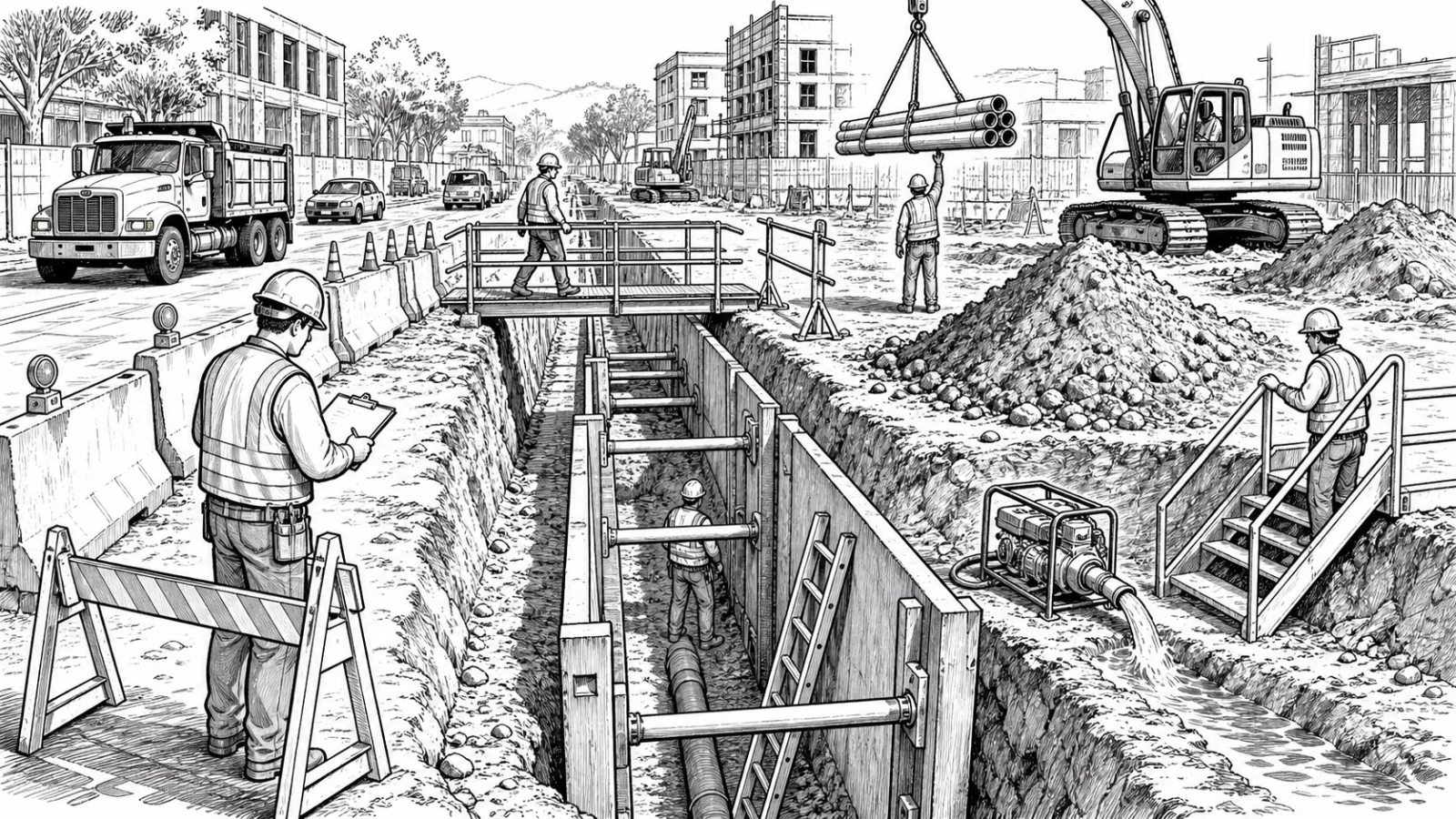
Reveal the six planning cues
- Access is too far away
The ladder is not positioned within the required travel distance for employees in the trench.
- Loose edge material
Spoil can roll or fall back into the excavation.
- Incomplete crossing protection
A pedestrian bridge lacks complete edge protection.
- Poor discharge routing
Pump discharge is routed where water can return to the excavation.
- Suspended-load exposure
A worker is positioned beneath or too close to the lifted pipe.
- Outside the shield
An employee is working beyond the area protected by the trench shield.
Project planning snapshot
- KnowDepth, utilities, soil, water, adjacent structures, traffic and access.
- VerifyCompetent-person classification, protective system and daily conditions.
- ControlSloping, shoring or shielding; access; spoil setback; barricades and testing.
- RecordInspections, protective-system data, utility planning and changes.
Fun facts
Three details worth remembering
- Five feet is the common cave-in threshold
An excavation under 5 feet can still require protection when a competent person identifies an indication of a potential cave-in.
- A trench shield protects occupants
A shield does not hold the excavation open; employees must remain within the protected area and the shield must be used within its data.
- Depth changes the design path
Protective systems for excavations more than 20 feet deep require design by a registered professional engineer under the applicable provisions.
Read the detailed planning guidanceConcise, source-grounded project considerations
Plan utilities, access and adjacent conditions
Locate and arrange underground installations before excavation. Review traffic, nearby structures, foundations, water, contaminated soil, restricted access, equipment position and the path for removing excavated material.
Select cave-in protection
Employees in excavations generally require an adequate protective system unless the excavation is entirely in stable rock or is less than 5 feet deep and a competent person finds no indication of a potential cave-in. Sloping, benching, shoring and shielding must follow the applicable design basis.
Provide access and manage the edge
Trenches 4 feet or more in depth require a safe means of egress positioned so employees travel no more than 25 feet laterally. Spoils and materials should be kept at least 2 feet from the edge unless retained or otherwise controlled.
Inspect and respond to change
A competent person should inspect excavations, adjacent areas and protective systems daily before work, as needed during the shift, and after rain or another hazard-increasing event. Employees should be removed from hazardous areas until required precautions are completed.
Primary references
Requirements can depend on the task, employer, location, project documents and actual field conditions.
SoCal Removal is a licensed demolition and environmental contractor—not an industrial hygienist, testing laboratory, engineer, attorney or regulatory agency.
Bring us in before the ground opens.
Early review helps align utility information, protective systems, access, equipment and material handling.
Send us
- Civil and utility drawings
- Excavation dimensions and schedule
- Site, access and adjacent-area photos
We review
- Utility and access gaps
- Protective-system constraints
- Hauling, water and schedule risks