Southern California Dismantling Contractor
Controlled Dismantling for Equipment, Steel & Building Components
SoCal Removal plans and performs defined dismantling scopes after the applicable structural, hazardous-energy, utility, residual-material and handling releases are established. The contract identifies what must remain intact, how components will be separated and handled, their intended destination and who accepts the completed work.
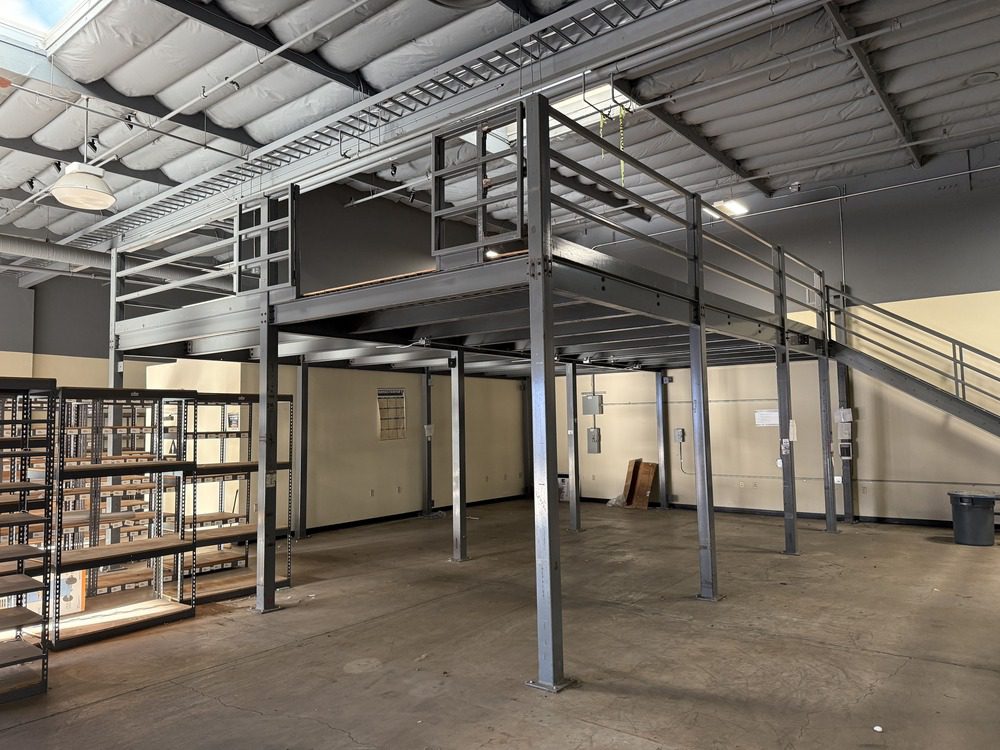
Assign the Work to the Right Service
Dismantling Owns the Disassembly Plan—not Every Demolition Decision
A project may contain facility transition, complete removal, precision partial demolition and interior strip-out. The lead service depends on what drives scope, risk and acceptance.
Dismantling
Separates identified equipment, steel, systems or building components where destination, connections, support, handling, custody and accepted condition matter.
Use when the disassembly and disposition record drives the work.Decommissioning
Arranges the move from a documented current condition to a written end state across operations, energy, utilities, residuals, assets, waste and turnover.
Explore DecommissioningStructure Removal
Removes an entire building or substantial structural system, including broader foundation, utility, engineering and site-turnover decisions.
Explore Structure RemovalSelective Demolition
Removes exact components while surrounding construction or operations remain, with remove, retain and protect limits controlling the package.
Explore Selective DemolitionInterior Demolition
Prepares interiors for tenant improvement or renovation through defined finish, partition, ceiling, casework and system-interface removal.
Explore Interior DemolitionScope boundary: Dismantling may be one work package inside a larger project. It does not transfer owner, utility, structural-engineering, environmental, laboratory, specialty-trade, rigging, transporter, receiving-facility or agency duties to SoCal Removal. The proposal identifies our contracted removal work and the assignments that must be completed by others.
The Dismantling Disposition Board
Every Intended Recovery Item Needs Five Decisions Before the First Cut
A dismantling plan is not a promise to save everything. It connects the intended destination to the release basis, separation method, movement route and receiving criteria for each identified item or material lot.
Tag it
Assign a unique ID, owner, photographs, known condition and intended disposition.
Release it
Resolve hazardous energy, utilities, residuals, regulated materials and structural authorization.
Separate it
Define connections, cut lines, temporary support, sequence, damage tolerance and match marks.
Move it
Assign weight, center of gravity, lifting or rigging role, clearance, staging, packaging and route.
Accept it
Name the destination, custody record, required condition, receiver and unresolved items.
This board is an intake and planning aid. It does not calculate structural capacity, approve a lift, establish zero energy, characterize a material, appraise an asset or certify suitability for relocation, reinstallation or reuse.
Source-Derived Work Packages
Ten Dismantling Packages That Require Different Information
Each card preserves a service topic from the existing page. It is a planning category—not an automatic contract inclusion, capability claim or promise that an item can be recovered intact.
01
Structural Steel & Pre-Engineered Frames
Beams, columns, trusses, mezzanines and prefabricated frames under issued connection, stability, sequence, temporary-support and destination criteria.
02
Machinery & Production Equipment
Defined machines, fixtures, hydraulic components and production equipment after energy, utility, residual, support and handling releases.
03
Conveyors & Material-Handling Systems
Tagged conveyor sections, supports, guards, controls and connected components separated to the project’s match-marking, staging and disposition plan.
04
Pipe Racks, Tanks & Process Components
Released piping, vessels, supports and industrial components after qualified assigned parties address contents, pressure, cleaning, purging, access and environmental conditions.
05
HVAC, Electrical & Utility Components
Identified equipment, duct, service and infrastructure components after utility owners or appropriately licensed assigned trades complete required disconnect, cap, drain or release work.
06
Architectural Features & Material Salvage
Selected doors, windows, trim, wood, masonry, ornamental items and other features under documented ownership, removal tolerance, preservation and acceptance criteria.
07
Elevated & Heavy-Civil Components
Project-specific bridge, overpass or elevated components only under the applicable agency, engineering, access, traffic, temporary-work and qualified lifting requirements.
08
Building Components for Relocation or Reuse
Tagged assemblies separated around connection, weather, packaging, custody and receiving criteria; removal does not certify future installation or performance.
09
Sectional Disassembly & Match-Marking
Documented section breaks, labels, fasteners, reference photographs, protection and packing that support an assigned relocation or owner-retention plan.
10
Material Segregation & Destination Routing
Steel, copper, aluminum and other alloys; timber; architectural items; machinery components; masonry; roofing and miscellaneous materials routed by condition and facility acceptance.
Higher-hazard and specialty structures are reviewed project by project. Power-plant, refinery, bridge, tank, contaminated-equipment and historic-preservation work depends on the actual facility, records, specialists, agencies, insurance and delivery model. This page does not represent blanket specialization in those sectors.
Information Before Separation
Give the Crew More Than an Asset List
The strongest early package connects each item’s intended destination to its current condition, connections, energy and utility interfaces, structural support, handling route, material status and receiving criteria.
It does not certify structural adequacy, locate every concealed connection or service, establish zero energy, characterize residues or materials, prove an item is suitable for reuse, or replace issued design, survey, rigging and receiving criteria.
Investigation Planning
Ways to Reduce Uncertainty
Current drawings, manuals, nameplates, service history, owner asset lists, photographs and intended destinations improve the starting record without independently verifying field condition.
Laser scanning, photogrammetry and dimensional surveys may document geometry and travel paths. GPR, electromagnetic locating and concrete scanning may investigate selected embedded or buried interfaces; radiography is a separate specialized method.
After applicable energy, material and structural releases, limited openings or test disassembly may expose anchors, welds, hidden supports, liners and connection details before the wider method is authorized.
Scanning and investigation cannot guarantee every concealed condition will be found. Records, scanning and controlled exposure reduce uncertainty but do not replace required surveys, engineering, utility releases, sampling or direct verification.
- Asset, equipment or component register with owner, tags, photographs and intended disposition.
- Current demolition, structural, architectural, mechanical, electrical and process records.
- Connection details, supports, fasteners, known weights, lifting points and damage tolerances.
- Process history, safety data, residual information and regulated-material surveys.
- Hazardous-energy, utility shutdown, disconnect, cap, drain and release assignments.
- Written demolition survey, issued engineering, sequence and temporary-support criteria.
- Handling, rigging, equipment, access, clearance, staging, packing and transport routes.
- Occupancy, operations, emergency interfaces, work windows, egress and communication plan.
- Receiver requirements, custody terms, material outlets, schedule and authorized change contact.
Pre-Dismantling Release Gates
Five Decisions Before the Affected Item Moves
These checkpoints connect owner intent and specialist decisions to a written field basis. They do not replace employer programs, professional judgment, agency authority or contract duties.
Ownership & Destination
Document title, item ID, intended disposition, required condition, commercial terms, custody and the authorized receiving party.
Energy, Utilities & Residuals
Assign shutdown, lockout or tagout, disconnect, cap, drain, clean, purge, pressure, vapor, confined-space and release responsibilities.
Structure, Connections & Sequence
Complete the applicable written demolition survey and obtain issued load-path, connection, temporary-support, cut-limit and retained-condition criteria.
Handling, Rigging & Route
Resolve weight, center of gravity, lifting points, qualified rigging or crane roles, equipment capacity, access, clearance, staging and travel path.
Materials, Agencies & Acceptance
Confirm survey coverage, waste roles, permits or notifications, transport and receiving routes, condition records and final acceptance criteria.
A release is item-, boundary-, phase- and party-specific. It is not a blanket statement that a facility is de-energized, empty, clean, structurally independent, unregulated or approved for reuse.
Five-Party Responsibility Map
Every Release, Movement and Acceptance Needs an Owner
Final assignments come from the proposal, contract and issued project documents. The public page does not transfer professional, owner, facility, specialty or regulatory duties by implication.
Owner / Facility / Generator
Provides title, process knowledge, records, safety data, hazardous-energy program, intended destinations, legal-generator decisions, access, schedule and authorized acceptance.
Design, Environmental & Preservation Professionals
Perform assigned demolition surveys, engineering, temporary-work design, material evaluation, sampling, laboratory interpretation, monitoring, preservation criteria and issued design work.
Utilities, Trades & Process-Safety Parties
Perform assigned shutdowns, disconnects, caps, draining, cleaning, purging, confined-space support, regulated-material work, system modification and specialty releases.
SoCal Removal
Plans and performs the contracted dismantling, demolition, segregation, loading, documentation and turnover portion after applicable scope releases are established.
Rigging, Transport, Receiving & Agencies
Exercise assigned lifting, movement, transportation, facility-acceptance, permit, notification and oversight roles. Contractor planning does not replace their authority or acceptance.
From Item Register to Turnover
An Eight-Step Dismantling Sequence
The order changes with the actual structure and destination, but each item should stay connected to its release, separation method, movement route and acceptance record.
- 01
Define
State the dismantling purpose, boundaries, destination, required condition and acceptance authority.
- 02
Inventory
Tag, measure and photograph items, connections, systems, supports and known material conditions.
- 03
Investigate
Reconcile records and assign structural, residual, material, connection and route questions.
- 04
Assign
Name responsibility for energy, utilities, engineering, specialty work, rigging, waste and acceptance.
- 05
Release & Protect
Close applicable gates and establish contracted work-zone, retained-item and temporary controls.
- 06
Disassemble
Separate released components in the planned sequence and apply required match marks or protection.
- 07
Route
Stage, package, load and transfer items or material streams through the documented custody path.
- 08
Turn Over
Reconcile the item log, records, temporary conditions, open issues and contracted acceptance criteria.
Existing-Page Field Context
Separation Work and System Hazards Tell Different Parts of the Story
The source photographs teach two planning questions. Neither image proves project ownership, completed scope, isolation, residual status, suitability for reuse or receiving-party acceptance.
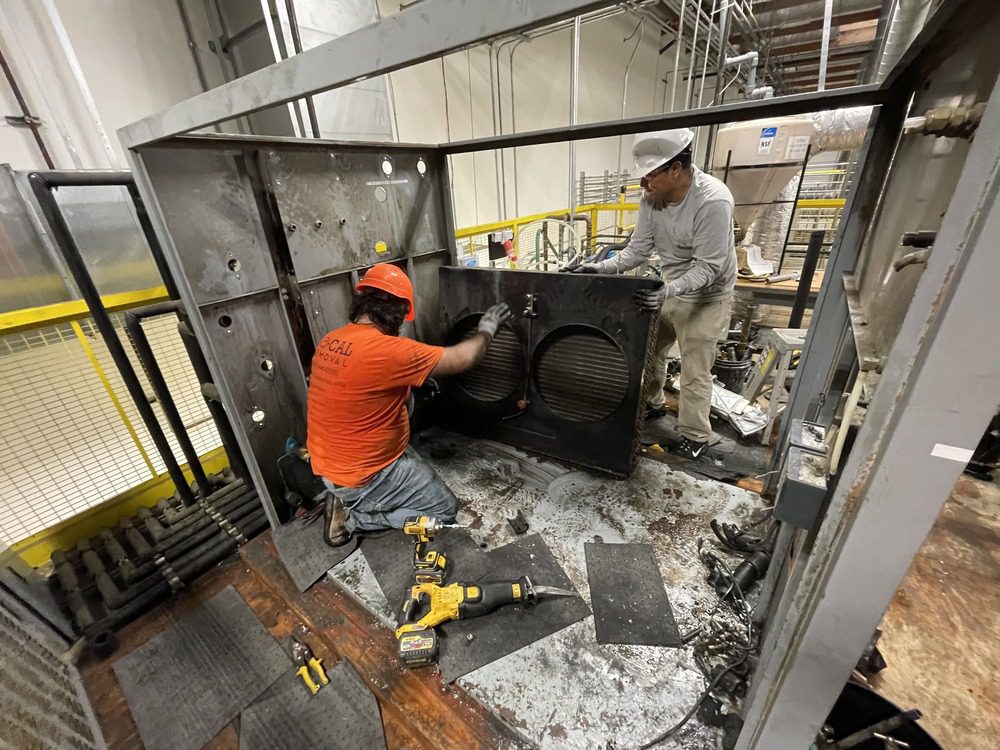
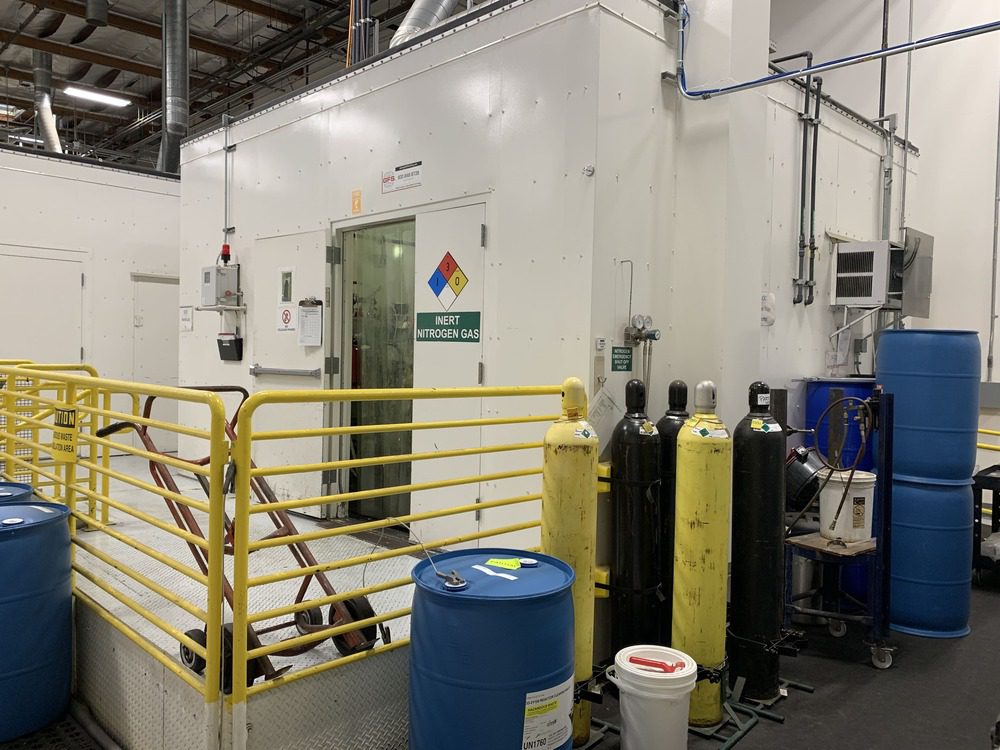
Current-condition context, not before-and-after proof. No slider is proposed because the source set does not contain an authenticated same-project, matched-view completed pair. The legacy Vimeo embed remains held from this replacement pending ownership, relevance, caption, privacy, accessibility and performance approval.
Changed-Condition Protocol
When the Item Does Not Match the Disassembly Basis
Hidden welds, altered supports, undocumented feeds, residual product, corrosion, unexpected weight, concealed materials, route conflicts or rejected condition can change method, sequence, cost and schedule.
- Pause the affected task
Limit further separation or movement at the mismatch.
- Maintain the interface
Keep access, energy, temporary support and material controls in the assigned condition.
- Do not infer
Do not cut, lift, open, enter or assume contents, capacity, weight or isolation from appearance.
- Document
Record the tag, location, photographs, connection, support, labels and work already performed.
- Notify
Contact the authorized owner, design, environmental, specialty or receiving decision-maker.
- Reconcile & authorize
Obtain revised direction, release evidence and written cost or time treatment before resuming.
Cost, Schedule, Handling & Recovery Drivers
The Number of Items Is Only One Part of the Price
Disassembly intent and acceptance criteria can change labor, equipment, specialty support, packaging, storage and schedule. Define the commercial basis before assuming a salvage credit.
- Required condition: intact recovery, sectional disassembly, component recovery or material segregation.
- Connection count, type, access, concealment, deterioration and damage tolerance.
- Structural sequence, demolition survey, temporary support and retained-condition requirements.
- Known weight, center of gravity, lifting points, equipment, rigging, reach and travel route.
- Hazardous energy, utilities, process residuals, regulated materials and specialty-party timing.
- Occupied operations, work windows, protection, emergency interfaces and communication requirements.
- Tagging, match-marking, cleaning assignment, packaging, storage, custody and transportation.
- Receiver criteria, market conditions, material outlets, waste facilities, schedule and change controls.
Asset Terms
Do not price an assumed salvage credit.
Potential value depends on title, condition, contamination status, disassembly effort, schedule, storage, custody, market and buyer acceptance. Any value, credit, risk of loss or ownership transfer belongs in the written contract.
Potential Material Streams
Separate only what the project and outlet support.
Steel, copper, aluminum and other alloys; structural timber and reclaimed lumber; architectural features; process equipment and machinery components; brick and stone; and selected roofing materials may be evaluated. Actual disposition depends on condition, contamination, separation effort and receiving-facility acceptance.
Closeout Records
Turnover Should Reconcile Every Tagged Disposition
Closeout records follow the contracted responsibilities and acceptance criteria. Collecting or transmitting another party’s record does not certify that party’s work or result.
- Final item, component and material disposition log.
- Applicable energy, utility, structural and specialty release records.
- Match marks, reference photographs, packing lists and custody records.
- Owner-retained, relocated, transferred, recycled and disposed-item reconciliation.
- Applicable profiles, manifests, weight tickets, receipts and receiving records.
- Temporary conditions, retained supports, open items and next-party responsibilities.
- Acceptance by the authorized party against the written contract criteria.
Practical Answers
Dismantling Planning Questions
These answers explain planning boundaries. The issued documents, written proposal and contract control actual scope, delivery model and responsibility assignments.
What is dismantling, and how is it different from conventional demolition?
Dismantling is the planned, item-by-item separation of identified equipment, systems, structural members or building components. It is useful when destination, retained condition, connection details, match-marking, handling, custody or material separation matter. Conventional demolition may be the better method when intact recovery is not required. The proposal defines which method and result are included.
How is dismantling different from decommissioning?
Dismantling owns the controlled physical disassembly of released items. Decommissioning owns the broader transition from a facility’s current condition to a written end state, including operating, hazardous-energy, utility, residual, environmental, asset, waste and turnover interfaces. A decommissioning project may contain a dismantling package, but the services are not interchangeable.
When should Structure Removal, Selective Demolition or Interior Demolition lead instead?
Structure Removal leads complete buildings or substantial structural systems. Selective Demolition leads precision partial removal where remove, retain and protect limits control the work. Interior Demolition leads primarily nonstructural strip-out and tenant-improvement preparation. Dismantling leads when component-by-component separation, handling and destination criteria are the central decisions.
Can equipment or building components be removed intact for relocation or reuse?
Potential intact recovery can be evaluated after the owner identifies title, destination, required condition and receiving-party criteria. Connections, support, weight, center of gravity, lifting points, route, packaging, custody and contamination status can change the feasible method. Removal does not certify that an item is suitable for reinstallation, recommissioning or future use.
Who shuts down, disconnects and locks out affected systems?
The owner or operating facility provides system knowledge and the applicable hazardous-energy program. Each employer controls its employees and assigned lockout or tagout duties. Utility owners and appropriately licensed or qualified trades perform applicable shutdown, disconnect, isolation, cap, drain or verification work. SoCal Removal removes only items expressly released for its contracted scope.
How are tanks, piping, residues and regulated materials addressed?
The owner provides process history, safety data and available contents information. Qualified assigned parties establish characterization, draining, cleaning, purging, pressure or vapor condition, confined-space, survey, abatement and release requirements. Appearance, labels or verbal representations are not treated as proof that an item is empty, clean, depressurized or unregulated.
When are engineering, temporary support, rigging or cranes required?
Structural alterations, uncertain connections, changing load paths, temporary works, heavy or irregular items, engineered lifting points and restricted movement routes may require issued information from the responsible engineer and qualified rigging or lifting parties. SoCal Removal follows the applicable issued documents; it does not provide structural engineering or certify loads, lifting devices or retained construction.
Can salvage or recycling reduce project cost?
Potential reuse, component recovery, recycling and salvage streams can be identified, but title, condition, contamination status, disassembly effort, schedule, storage, market, buyer and receiving-facility acceptance all affect disposition. No quantity, value, diversion result, credit or cost offset is assumed unless the contract states the basis, ownership, risk and acceptance terms.
What information is needed for a useful dismantling estimate?
Useful information includes the asset or component register; drawings and photographs; intended destination and acceptance condition; connection and support details; known weight or equipment data; energy, utility and residual status; material surveys; access, lifting and travel routes; work windows; waste requirements; schedule milestones; and the authorized change and acceptance contacts. Unknowns should remain identified assumptions, allowances or release gates.
What records and acceptance criteria define completion?
Completion is measured against the written dismantling scope and turnover criteria. Closeout may include an item and disposition log, photographs, match marks, packing or custody records, weight tickets, receipts, manifests, temporary-condition status, unresolved-item log and acceptance by the authorized party. It does not certify environmental closure, reuse suitability, recommissioning or downstream construction readiness unless expressly assigned.
Begin with the Item Record
Send the Asset List, Connection Information & Intended Destination
Share current plans, photographs, item or equipment lists, available weights and manuals, process and residual information, material surveys, connection details, access and lifting constraints, shutdown status, destination requirements, schedule and acceptance criteria. We will identify service fit, release gaps, assigned-party interfaces, pricing assumptions and the next review step.