Project address and contact
Identify the property, decision-maker, site contact, and contracting party.
Start here to understand where SoCal Removal fits, what information defines a workable scope, and which decisions remain with owners, consultants, inspectors, and agencies.
For: For homeowners, commercial owners, property managers, general contractors, institutions, and public agencies evaluating demolition, site preparation, or environmental contractor work.
 View full size
Complete project information allows scope, responsibility, risk, schedule, and pricing assumptions to be identified before mobilization.
Identify the property, decision-maker, site contact, and contracting party.
Send plans, specifications, sketches, demolition limits, alternates, and the required turnover condition.
Include current photos, dimensions, counts, material descriptions, and known damage or access restrictions.
Provide available environmental, laboratory, engineering, geotechnical, utility, and consultant documents.
Describe tenants, retained operations, security, parking, staging, haul routes, and equipment access.
List target dates, milestones, phasing, shutdowns, permitted work hours, and planning constraints.
Include bid forms, insurance, bonds, labor compliance, submittals, reporting, and closeout requirements.
From the Field
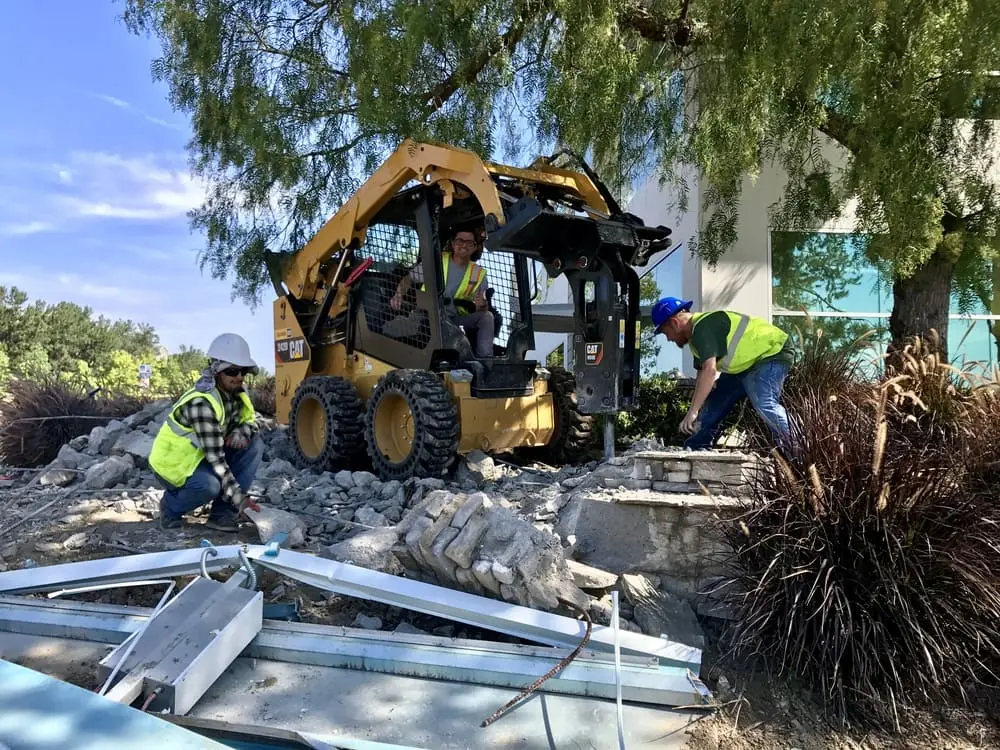
A site walk can confirm access, retained improvements, equipment fit, and visible conditions. Plans, surveys, utility information, testing, and written responsibility assignments still control the work that can be released.
Each answer identifies practical inputs, responsibility boundaries, and conditions that should be confirmed for the actual project.
Confirm the contractor role, service area, and basic qualification fit before developing the project scope.
SoCal Removal performs structural and selective demolition, concrete and asphalt removal, site preparation, debris handling, lead and mold contractor scopes, hazardous-material removal, contaminated-material handling, public works, and related field work. The proposal controls the actual included scope, exclusions, documentation, waste handling, and turnover condition for each project.
The primary service area is Southern California, including Orange, Los Angeles, Riverside, San Bernardino, and surrounding counties. Suitable work elsewhere in California can be evaluated when scope, staffing, equipment, schedule, and mobilization logistics support the project.
Abajian Enterprise dba SoCal Removal operates under California CSLB License #980451 with A, B, and C-21 classifications, HAZ certification, and ASB certification for bidding purposes only. SoCal Removal maintains contractor insurance; requested certificates, limits, endorsements, bonds, registrations, and qualification documents should be reviewed against the actual project requirements before award.
Complete documents make scope gaps, assumptions, exclusions, logistics, and schedule dependencies easier to identify.
Send the project address, requested scope, plans, specifications, photographs, quantities, available surveys and reports, occupancy and access conditions, desired schedule, bid documents, and insurance, bonding, or labor requirements. We will identify missing inputs before firm scope and pricing are confirmed.
A complete document package may support preliminary budgeting, but many demolition and environmental scopes need a site walk to confirm visible quantities, access, protection, utilities, staging, hauling, retained improvements, and work-hour restrictions. A site walk does not replace required testing, surveying, engineering, or consultant evaluation.
They can be confirmed when the work limits, material information, access, utilities, disposal path, contract requirements, third-party responsibilities, and schedule assumptions are sufficiently defined. Unknown or unresolved conditions may require qualifications, allowances, unit prices, or later written changes instead of an unqualified lump sum.
Contractor work depends on documents and decisions issued by the parties authorized to test, design, inspect, or approve.
No. SoCal Removal is a demolition and environmental contractor, not an independent laboratory, industrial hygienist, environmental consultant, engineer, surveyor, inspector, attorney, or regulatory agency. Qualified independent parties perform their respective testing, analysis, design, monitoring, clearance, inspection, and approval services when required.
Responsibility should be assigned in the proposal or contract. Depending on the requirement, the owner, consultant, operator, performing contractor, or another authorized party may need to prepare, sign, or submit the filing. SoCal Removal can arrange assigned contractor documentation, but the responsible agency controls acceptance and processing.
No. Cities, agencies, consultants, laboratories, engineers, and inspectors control their own reviews, findings, and decisions. A schedule may carry reasonable processing allowances, but approval dates, inspection outcomes, facility acceptance, and independent clearance results are not guaranteed.
Written scope, payment, documentation, and compliance terms should match the type and risk of the project.
The parties should document added, deleted, or changed work through the contract process before the changed work proceeds whenever practicable. The written record should identify the revised scope, price, schedule effect, assumptions, exclusions, and authorization so payment and closeout records remain clear.
Provide required limits, endorsements, additional-insured wording, waivers, pollution terms, bonds, and qualification forms before pricing. Project-specific requirements can affect cost, lead time, subcontracting, and whether the opportunity is commercially workable.
Provide drawings, specifications, addenda, bid forms, alternates, schedule milestones, phasing, labor requirements, insurance, bonding, submittals, waste-diversion requirements, reporting, and closeout expectations. Public works packages should also clearly identify prevailing-wage, registration, apprenticeship, certified-payroll, and agency-specific obligations that apply.
SoCal Removal performs only the contractor field scope expressly included in its agreement. Owners, consultants, laboratories, engineers, surveyors, inspectors, utilities, disposal facilities, and agencies retain responsibility for their respective information, testing, design, decisions, acceptance, and approvals.
Reliable pricing and scheduling depend on the documents, access, responsibilities, quantities, and acceptance requirements identified for the project.
Continue with the service, planning guide, or project resource that best matches the work being evaluated.
Build an address-specific readiness matrix for surveys, utilities, notices, site controls, waste routes, and documented release.
Planning, permits, utilities, field controls, debris, and concealed conditions.
Access, work hours, sequencing, schedule controls, and delay documentation.
Review SoCal Removal demolition, environmental, and site-preparation capabilities.
Send the address, plans, photos, available reports, access conditions, and target schedule. We will identify missing inputs and the next practical step before scope and pricing are confirmed.
2026 prices: All 2026 cost guides
This site is protected by reCAPTCHA.