Santa Ana-based contractor · CSLB #980451 · License, insurance and bonding
Long Beach Demolition, Abatement & Site Preparation
SoCal Removal handles demolition, abatement and site preparation in Long Beach, from older homes and apartment buildings to commercial and industrial sites. When asbestos turns up before demolition, a Cal/OSHA-registered abatement subcontractor removes it. Long Beach adds steps many cities don’t: oil well and methane review before you rebuild, a recycling deposit of up to $56,999, and Cultural Heritage Commission review in 18 historic districts. We plan for all of them before we price the work.
Get a Quote Call (949) 446-0000
Our work near Long Beach
Our Los Angeles County work near Long Beach includes:
- Compton asbestos popcorn ceiling removal — about 600 square feet removed ahead of a first-time homeowner’s renovation
- Redondo Beach dental office demolition and abatement
- Louise Park restroom and concrete demolition
- Huntington Beach townhome asbestos ceiling removal — just across the county line
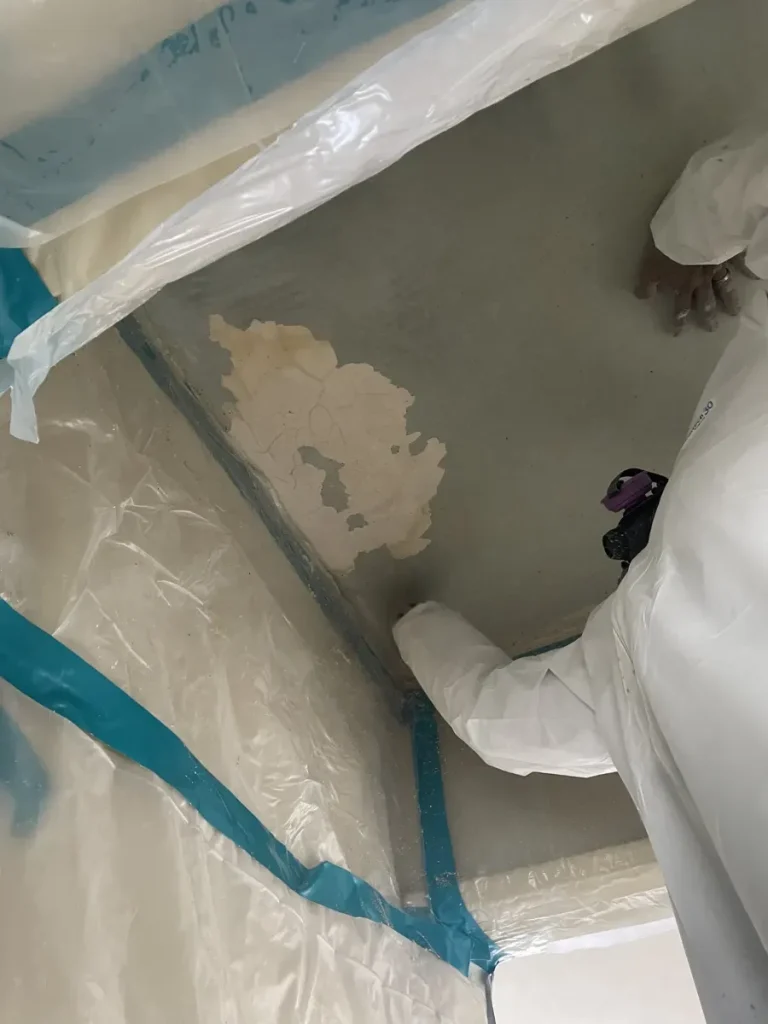 Asbestos Popcorn Ceiling Removal in Compton
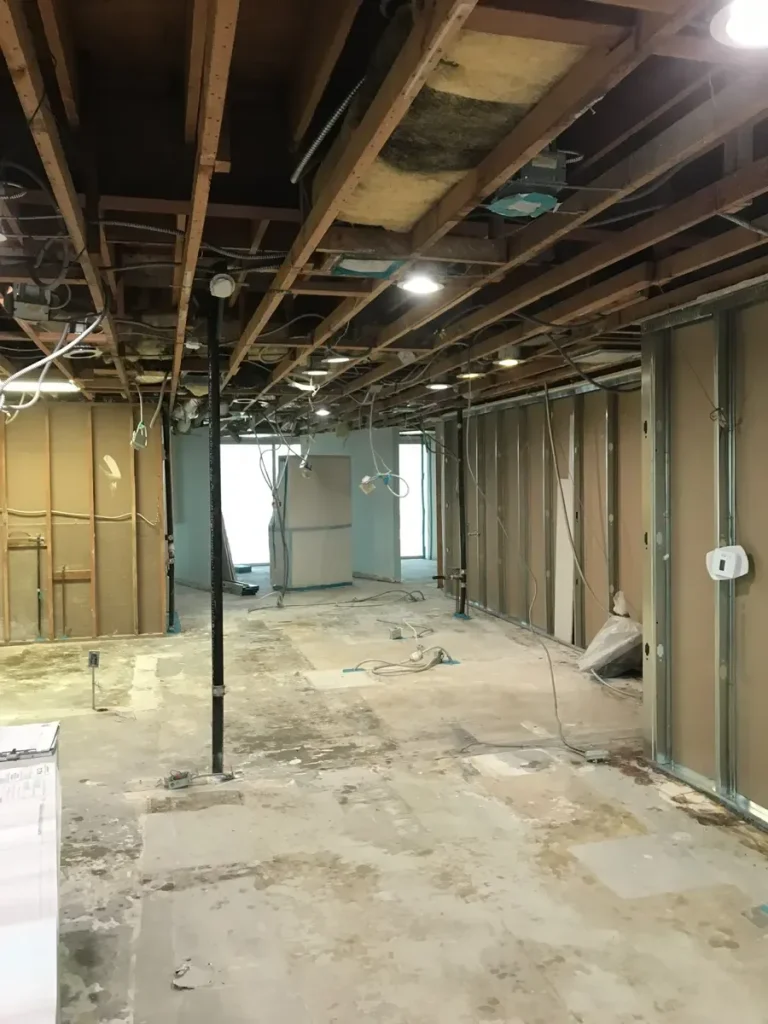 Dental Office Demolition and Abatement in Redondo Beach
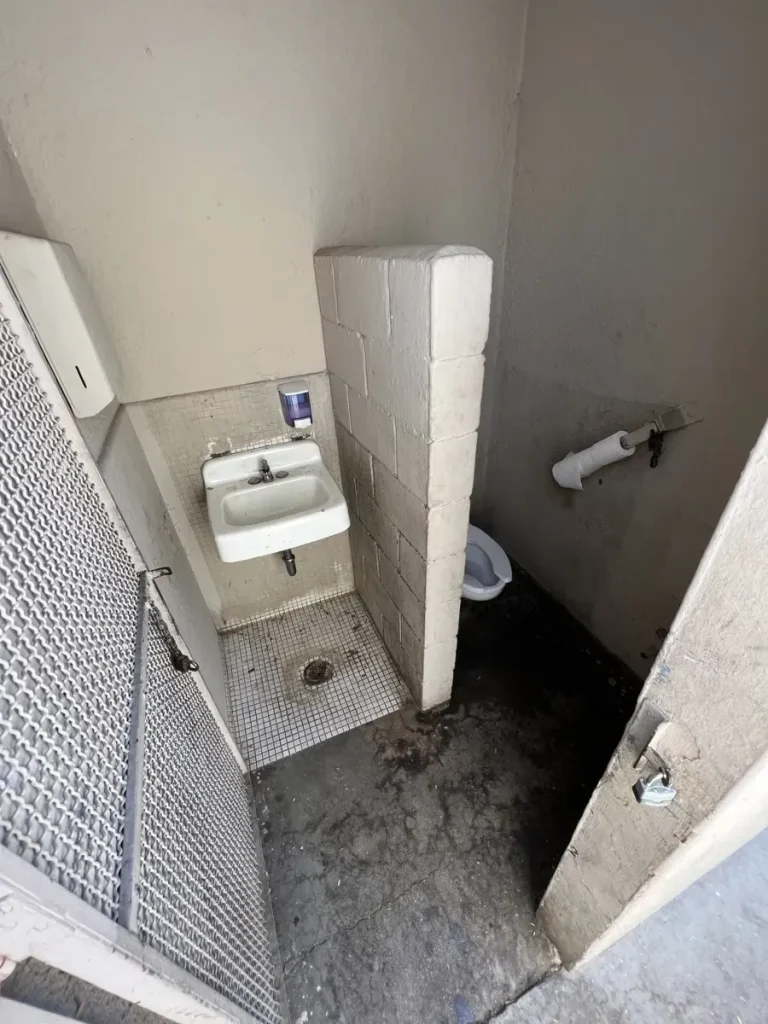 Louise Park Restroom and Concrete Demolition
Demolition in Long Beach
Long Beach has some of the oldest building stock in Southern California, so much of our work here is older houses, garages and multi-unit buildings coming down for a rebuild, plus commercial and industrial interiors stripped for new tenants. The city expects hand-wrecking or machine demolition; any other method, buildings of five or more stories, basements deeper than 5 feet and shared walls all go to plan review first.
- House and building demolition: homes, garages, apartments and commercial buildings, slab left or to dirt
- Interior demolition: office, retail and industrial strip-outs
- Selective demolition: walls, openings and finishes when the building stays
- Pool removal: partial or full removal, utilities capped, backfill compacted in lifts
- Dismantling: equipment, steel and mezzanines on industrial sites
Our crews work daylight hours, inside Long Beach’s allowed construction hours. When a business needs to stay open, we offer after-hours work where the city allows it; Sunday work needs a Noise Control Officer permit.
What a demolition permit in Long Beach requires
Demolition permits are issued by Building & Safety in the Community Development Department at the Permit Center, 411 W. Ocean Blvd. (Permit Center). The permit must be pulled by a licensed demolition contractor with an active Long Beach business license. The city’s demolition bulletin IB-047 requires:
- An application for each building, stating the demolition contract amount, the number of residential units and the demolition method, plus a scaled plot plan
- A sewer capacity credit form and a field inspection of site and pedestrian protection
- Planning clearance for historic districts, the Coastal Zone and any net loss of dwelling units
- Public Works clearance for utilities and the right-of-way, with any pedestrian-protection permit issued first
- Gas disconnect and water review from Long Beach Utilities, and an SCE electric disconnect
- A Health Department vermin clearance and a copy of the South Coast AQMD Rule 1403 notification
- Cal/OSHA notice for buildings over four stories or excavations deeper than 5 feet, and a Harbor Department permit inside the Harbor District
If the building shares a wall with a neighbor, the city notifies that owner and will not issue the permit for 30 days unless the owner consents in writing.
Every demolition falls under the city’s construction and demolition recycling program: 65% of debris must be diverted under a management plan, and the city holds a deposit of 3% of project value or $56,999, whichever is less, with a $1,712 minimum. The final report with facility receipts is due within 90 days of final inspection, and the refund is proportional to what was actually diverted. Debris must go with a city-permitted hauler or be self-hauled; other haulers can forfeit the deposit (city C&D program).
Permit rules on this page were checked against city sources in October 2026 and are re-checked every six months.
Historic districts, oil wells and tenants in Long Beach
Long Beach has 18 historic districts with more than 7,000 properties, among them Belmont Heights, Bluff Park, California Heights and the Wrigley Area (city historic districts). The city says demolition permits in a district are very difficult to obtain: the project needs environmental review and Cultural Heritage Commission review, which can take six months to a year, and no demolition permit is issued until the replacement building permit is approved (city historic preservation FAQ).
Oil wells are common under Long Beach lots. Before a building or grading permit for the rebuild, the city’s bulletin IB-054 requires checking the city’s well map, showing wells on a site plan signed by a qualified professional and getting a state CalGEM well review less than 12 months old. Wells within 300 feet trigger added requirements, an abandoned well that reads over 500 ppm must be re-abandoned, and methane testing applies unless the site is exempt (bulletin IB-055). We flag wells before demolition so the rebuild isn’t held up.
For rental buildings, a no-fault termination for demolition is allowed only after all permits are issued, the notice must include copies of the permits and the expected demolition date, and relocation pay is the greater of $4,500 or two months’ rent (city notice to rental owners).
Coastal permits and utilities in Long Beach
Long Beach’s Local Coastal Program was certified in 1980. The city issues local coastal development permits or categorical exclusions in its own and appealable areas, and the Coastal Commission issues them in its original-jurisdiction areas (city coastal planning). Planning screens every Coastal Zone demolition permit.
Long Beach Utilities provides water, gas and sewer, and SCE provides power. For gas, an LBU inspector meets on site, LBU cuts the service and removes the meter, and LBU sends the gas release to the permit office (LBU demolition guidelines).
Site preparation in Long Beach
After demolition we remove foundations, slabs and paving, rough grade the lot and haul concrete and asphalt to recyclers.
- Pool removal. A grading permit is required either way. Full removal means hauling the shell and compacting the fill to at least 90%, tested by a city-approved lab with an approved compaction report. Leaving the shell is allowed only under landscape areas on slopes of 10% or less, with two holes at least 24 inches wide, no more than 8 feet apart, an inspection before fill and a covenant recorded before the permit is issued (bulletin IB-008).
- Cal/OSHA on pool removals. When the pool shell comes out and the hole is 5 feet or deeper, it is an excavation under Cal/OSHA, and the contractor needs a Cal/OSHA Trench/Excavation permit, permit type T1 on the Cal/OSHA application, before anyone goes in (8 CCR 341, Cal/OSHA form 41-1). We pull a T1 project permit for the job and designate a competent person for each project, as the permit requires. Excavations 5 feet or deeper must be sloped, benched or shored unless they are entirely in stable rock (8 CCR 1541.1), and a competent person inspects the excavation daily and after every rain. We keep broken concrete and spoil at least 2 feet from the edge, provide a ladder or ramp within 25 feet of travel, barricade the open pit and keep crews out of standing water (8 CCR 1541), and we call DigAlert at least two working days before digging (CSLB). Breaking the shell with jackhammers falls under Cal/OSHA’s silica standard, so we use water at the point of impact or shrouded dust collection under a written exposure control plan (8 CCR 1532.3).
- Grading. The city may require a grading bond at 250 cubic yards or more, or 50 cubic yards of potentially hazardous soil (bulletin IB-020), and asks that major grading be scheduled in dry months, with erosion control year-round (bulletin IB-039).
- Bins in the street. A Public Works temporary occupancy permit is needed at least three business days before delivery, the bin must come from an approved city vendor, it sits against the curb next to the property and not on red or blue curbs, in front of driveways or blocking alleys, and No Parking signs go up 24 hours ahead (temporary occupancy permit).
- Work hours. Construction runs 7 a.m. to 7 p.m. on weekdays and 9 a.m. to 6 p.m. on Saturdays; Sunday work needs a Noise Control Officer permit (bulletin IB-027). Street trees are managed by Public Works, and removing one starts with an arborist inspection request.
On every Long Beach site we control dust under South Coast AQMD Rule 403: water on the work, no visible dust past the property line and track-out cleaned up daily. More on site preparation, concrete removal, grading and utility locating.
Abatement in Long Beach
Abatement means removing what makes a property unsafe, unpermitted or unusable. Owners usually call us after a city notice of violation, before a sale, or before a rebuild.
- Unpermitted additions and structures: enclosed patios, garage conversions, sheds and rooms built without permits, removed under a demolition permit so the property matches its approved plans again.
- Damaged and unsafe buildings: fire-, storm- or impact-damaged structures secured with board-up and fencing, then taken down.
- Rubbish and abandoned items: junk, debris piles, old appliances and leftover building materials loaded, hauled and recycled.
- Hazardous substances: under our CSLB HAZ certification we remove contaminated soil and abandoned fuel and holding tanks.
- Brush and old pools: weeds and brush cut for fire clearance, and unused pools removed by the method the city requires.
See hauling and disposal, land clearing and hazardous materials prices.
Asbestos abatement before demolition in Long Beach
About 82.5% of Long Beach homes were built before 1980, and SCAG reports that 70% were built before 1970 (SCAG local profile). Nearby, our registered abatement subcontractor removed about 600 square feet of asbestos popcorn ceiling in Compton before a renovation.
In older Long Beach houses and apartment buildings the abatement work most often covers plaster and acoustic ceilings, floor tile and mastic, pipe and duct insulation, and transite.
Every job starts with a survey by an independent Certified Asbestos Consultant and accredited-lab results. You can hire the consultant directly, or we bring one in and include the fee in our estimate. When the survey finds asbestos, a separately licensed asbestos abatement contractor registered with Cal/OSHA (DOSH) removes it under subcontract to SoCal Removal, following Cal/OSHA’s asbestos standard (8 CCR 1529) and South Coast AQMD Rule 1403: the work area contained, the material kept wet, and the waste bagged, labeled and hauled under a manifest. An independent consultant can run clearance air samples before the area is reopened, and we schedule the demolition around that work.

Every demolition in the South Coast air district, including Long Beach, needs the asbestos survey and an AQMD notification 10 working days before work starts, even when no asbestos is found (Rule 1403). For lead, SoCal Removal is an EPA RRP lead-certified firm and removes lead-based paint, lead-glazed tile and coated components as part of renovation and demolition, using lead-safe work practices. When a project calls for lead abatement under California rules, that work is done by certified lead workers with the required controls, notifications and medical monitoring; our pollution coverage is listed on our qualifications page. See asbestos abatement, lead removal and testing prices.
Disaster recovery in Long Beach
Earthquake is Long Beach’s defining risk. The March 10, 1933 Long Beach earthquake, a magnitude 6.4 on the Newport-Inglewood Fault, killed 120 people, 52 of them in Long Beach, destroyed dozens of schools and led to the Field Act for school construction (California Geological Survey). The city says the fault can produce up to a magnitude 7.4 and counts about 3,100 potential soft-story buildings (city seismic memo). Liquefaction zones are widespread along the river lowlands, Alamitos Bay and the harbor fill (CGS hazard report), a large tsunami could flood sizeable areas up to 15 feet in elevation (CGS tsunami maps), and the Compton Creek and Dominguez Channel levees no longer contain FEMA’s 100-year flood (city flood zone page).
After a fire, flood, earthquake or vehicle impact, we secure the property first with board-up and temporary fencing. Then we remove damaged materials and debris and, once the owner, insurer and city agree on the scope, demolish what can’t be saved and clear the site for the rebuild. Our recovery work includes fire-damaged property abatement and cleanup in Boyle Heights, vehicle-impact storefront demolition and repair in Westminster and vehicle-impact cleanup and board-up at a church.
After an earthquake, a red Unsafe placard means the building may not be entered without the city’s written authorization, but the state placard itself says it is not a demolition order (Cal OES placard). Repairs costing half or more of a building’s market value in a flood zone must meet the rules for new buildings. Asbestos rules still apply after a disaster: South Coast AQMD requires an approved Procedure 5 plan before fire- or storm-damaged asbestos material is cleaned up, and when a government agency orders a dangerous building demolished, the notice is filed as an ordered demolition without the usual 10-working-day wait (AQMD Rule 1403 FAQ). Homeowner policies often include debris-removal coverage on top of the dwelling limit, commonly an extra 5% of Coverage A, so ask your adjuster (California Department of Insurance).
What it costs in Long Beach
Our published 2026 prices are the same in Long Beach as everywhere else we work. City permit fees, the AQMD notification fee and any recycling deposit are extra; see demolition permit and AQMD fees by city.
- House, garage or ADU demolition, collapse and remove with the slab left: $26.50–$31.50 per square foot
- Full demolition to dirt, foundation and slab out: $42–$51 per square foot
- Fire-damaged structure demolition, slab left: $29–$35 per square foot
- Interior demolition and gut-outs: $22.50–$26.50 per square foot
- In-ground pool removal, by the method the city requires: $15,750–$31,500
- Concrete slab removal, 4 inches: $8.75–$10.50 per square foot ($6–$7.25 at 5,000 SF and up)
- Lot clearing and grubbing: $22,000–$26,250 per acre
- Rough grading: $1.35–$1.85 per square foot of pad
- Asbestos popcorn ceiling abatement, by our registered subcontractor: $9.50–$12.75 per square foot
- Asbestos floor tile and mastic abatement, by our registered subcontractor: $17–$23.50 per square foot
- Asbestos sample, standard turnaround: $120–$145 per sample
- Temporary 6-foot construction fence: $21–$25 per linear foot
Minimums are $3,750 for demolition and site preparation and $1,950 for asbestos or lead work. See the demolition, fire-damaged demolition, interior demolition, asbestos removal, popcorn ceiling, pool removal, land clearing and grading cost guides, or all 2026 prices.
Long Beach demolition and abatement questions
How much is the Long Beach demolition recycling deposit?
3% of project value or $56,999, whichever is less, with a $1,712 minimum. The refund is proportional to the debris actually diverted, with the final report and receipts due within 90 days of final inspection.
Can I demolish a house in a Long Beach historic district?
It is difficult. The city requires environmental review and Cultural Heritage Commission review, which can take six months to a year, and will not issue the demolition permit until the replacement building permit is approved.
Do I need to check for oil wells before rebuilding in Long Beach?
Yes. Before a building or grading permit, the city requires a well check against its map, a site plan signed by a qualified professional, a recent CalGEM well review and methane testing unless the site is exempt.
What does Long Beach require to remove a pool?
A grading permit. The shell can be fully removed with compacted, lab-tested fill, or left in place only under a landscape area on a gentle slope, with drain holes, an inspection and a recorded covenant.
Can I put a dumpster on the street in Long Beach?
Yes, with a Public Works temporary occupancy permit at least three business days before delivery. The bin must come from an approved city vendor and sit against the curb, with No Parking signs posted 24 hours ahead.
Start with the address and a few photos
Send the property address, photos, any asbestos survey and your target schedule. We walk the site, check the permit path for that parcel and send a written, itemized price. Call (949) 446-0000 or request a project review.
Nearby: Torrance · Redondo Beach · Huntington Beach · Costa Mesa · Santa Ana · All of Los Angeles County